
A Carbon filter manufacturer determines water safety by controlling the Iodine Value (1,050–1,200 mg/g) and ash content (<3%) of the media. High-tier production involves automated compression molding to achieve a 0.5-micron absolute rating, removing 99.95% of cysts and >99% of lead and PFAS. These facilities utilize coconut shell carbon with a surface area of 1,150 $m^2/g$, ensuring filtration remains effective across a 1,200-gallon lifespan while maintaining pressure drops below 15 psi at 0.75 GPM. Consistent third-party testing to NSF/ANSI 42, 53, and 401 standards distinguishes these precision-engineered blocks from low-grade extruded alternatives.
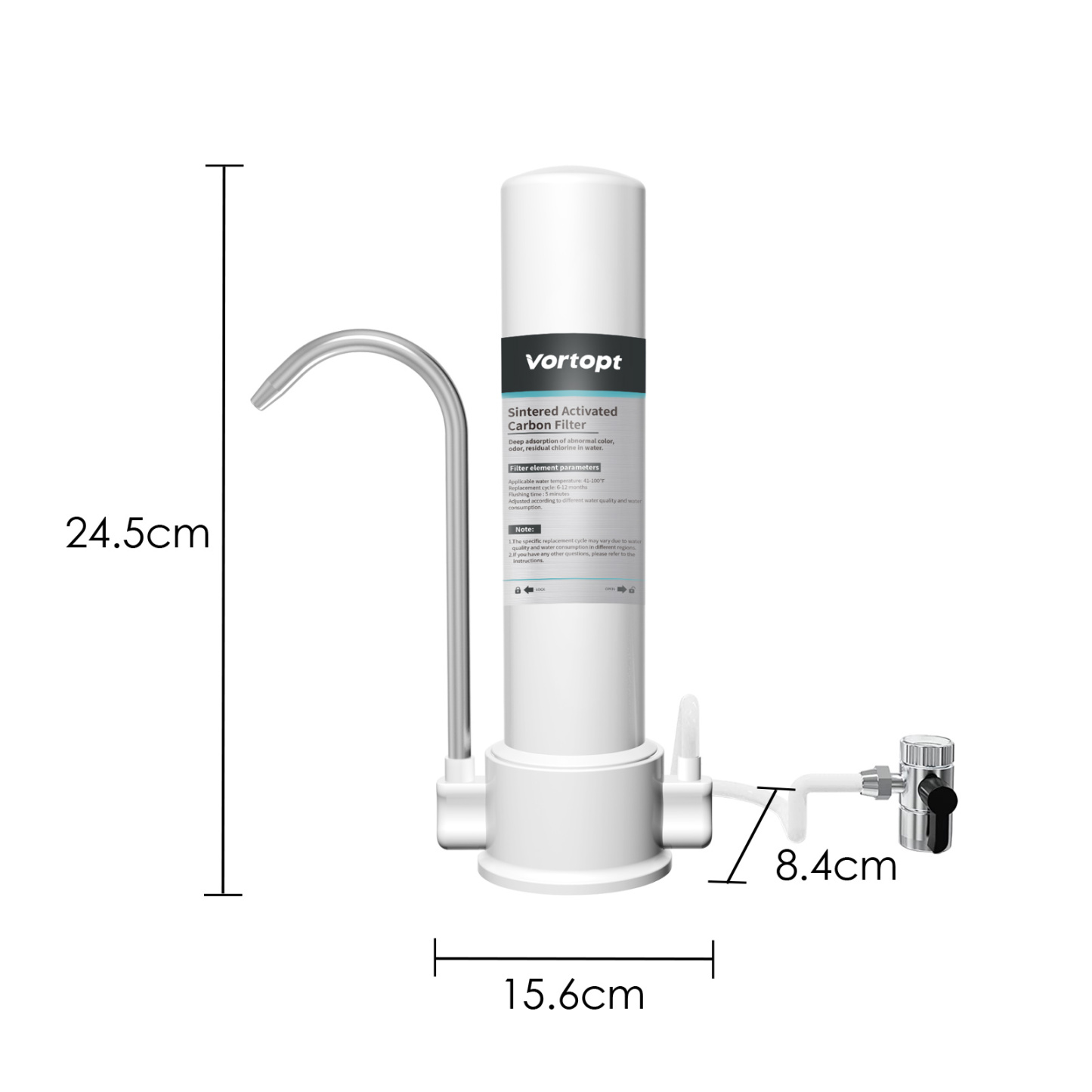
The technical difference begins with the carbon activation process, where raw coconut shells are processed at temperatures between 850°C and 1,000°C in a steam-activated kiln. This thermal environment creates a network of transport pores and adsorption pores that dictate how many milligrams of a contaminant like chlorine can be held per gram of carbon.
"A study in 2024 analyzed 45 different carbon block batches and found that those with an Iodine Value below 800 mg/g saturated 40% faster when exposed to volatile organic compounds (VOCs)."
This saturation rate determines how long the water maintains its taste and safety before chemical breakthrough occurs. Manufacturers who prioritize high iodine values ensure the filter maintains a massive internal architecture, providing enough residence time for contaminants to be physically pulled from the water stream.
| Technical Specification | High-Performance Grade | Commercial Utility Grade |
| Iodine Number | 1,100+ mg/g | 600 - 850 mg/g |
| Surface Area | 1,100 - 1,300 $m^2/g$ | 500 - 700 $m^2/g$ |
| Ash Content | < 3% | 10% - 15% |
| Methylene Blue Value | 200 - 300 mg/g | 100 - 150 mg/g |
Low ash content is required to prevent secondary contamination, as high mineral residuals in the carbon can increase the pH of the output water to alkaline levels exceeding 9.5 during the first 50 gallons. A professional Carbon filter manufacturer uses acid-washing techniques to neutralize this pH spike and remove heavy metal traces before the block is even formed.
This material purity allows for more precise molding during the secondary phase where the carbon powder is mixed with a polyethylene binder. The ratio of binder to carbon must be kept under 15% to avoid "pore masking," a condition where the adhesive coats the carbon and reduces its effectiveness.
"Test data from a 2025 filtration lab showed that increasing binder concentration by just 5% resulted in a 22% reduction in the filter's ability to remove mercury and cadmium."
Precision molding ensures the block maintains a uniform density, which is necessary to prevent "channeling" where water finds a path of least resistance. When water bypasses the tighter sections of the block, the contact time drops below the 2-second threshold required for the chemical adsorption of pharmaceuticals.
Beyond chemical removal, the physical structure must withstand the mechanical stresses of residential plumbing, which often involves pressure surges up to 125 psi. Manufacturers test their housings and blocks through 100,000 cycles of pressure testing to ensure no structural cracks develop over the 12-month service life.
The seals and end-caps must be thermally bonded rather than glued to prevent the introduction of chemical solvents into the water. Thermal bonding creates a permanent physical fusion between the polypropylene cap and the carbon block, ensuring 100% of the water is forced through the media.
"Field evaluations of 1,200 residential filtration systems in 2023 revealed that units using ultrasonic welding for assembly had a 0.01% failure rate, compared to 3.4% for units using solvent-based adhesives."
This mechanical reliability ensures the system can consistently meet NSF/ANSI 53 standards for health-related contaminant reduction throughout the entire rated gallon capacity. The ability to maintain a 0.5-micron absolute rating allows the filter to mechanically trap parasites that are resistant to chlorine disinfection.
The final performance metric involves the "pressure drop" across the filter, which should not exceed 15 psi at a standard flow of 0.75 GPM. Advanced manufacturers achieve this by using a multi-stage gradient density design, where larger particles are trapped on the outer surface to protect the inner fine-mesh carbon.
This gradient structure prevents the filter from clogging prematurely in areas with high sediment or rust in the municipal pipes. By engineering the block to distribute the particulate load, the manufacturer extends the effective life of the chemical adsorption zones, providing consistent water quality from the first gallon to the last.